21 Easy Braid Hairstyles With Step-by-Step Tutorials
If braiding has always felt tricky, braid hairstyles easy tutorial guides make it simple. These step-by-step styles start with the absolute basics and build your skills one braid at a time. You do not need any experience to start, just a little patience.
Each idea below includes clear steps, a realistic difficulty rating, and beginner tips. Grab a mirror, some elastics, and learn at your own pace. By the end, you will have a full toolkit of braids for any occasion.
Braid Hairstyles Easy Tutorial: 21 Ideas to Try
Here are 21 braid ideas, starting with the easiest. Each one works as its own pin.
1. Classic Three-Strand Braid

The three-strand braid is the foundation of every other braid style. Once you can cross the outer strands over the middle one smoothly, every tutorial on this list gets easier. It is the one skill every other braid on this list builds on.
Practice on a side ponytail first so the sections stay separated, and use a little Cantu Shea Butter Leave-In Conditioning Repair Cream to keep strands smooth while you learn. As an Amazon Associate I earn from qualifying purchases.
- Best for: Absolute beginners learning their very first braid.
- Styling difficulty: Easy
- Maintenance level: Low
2. Two-Minute French Braid
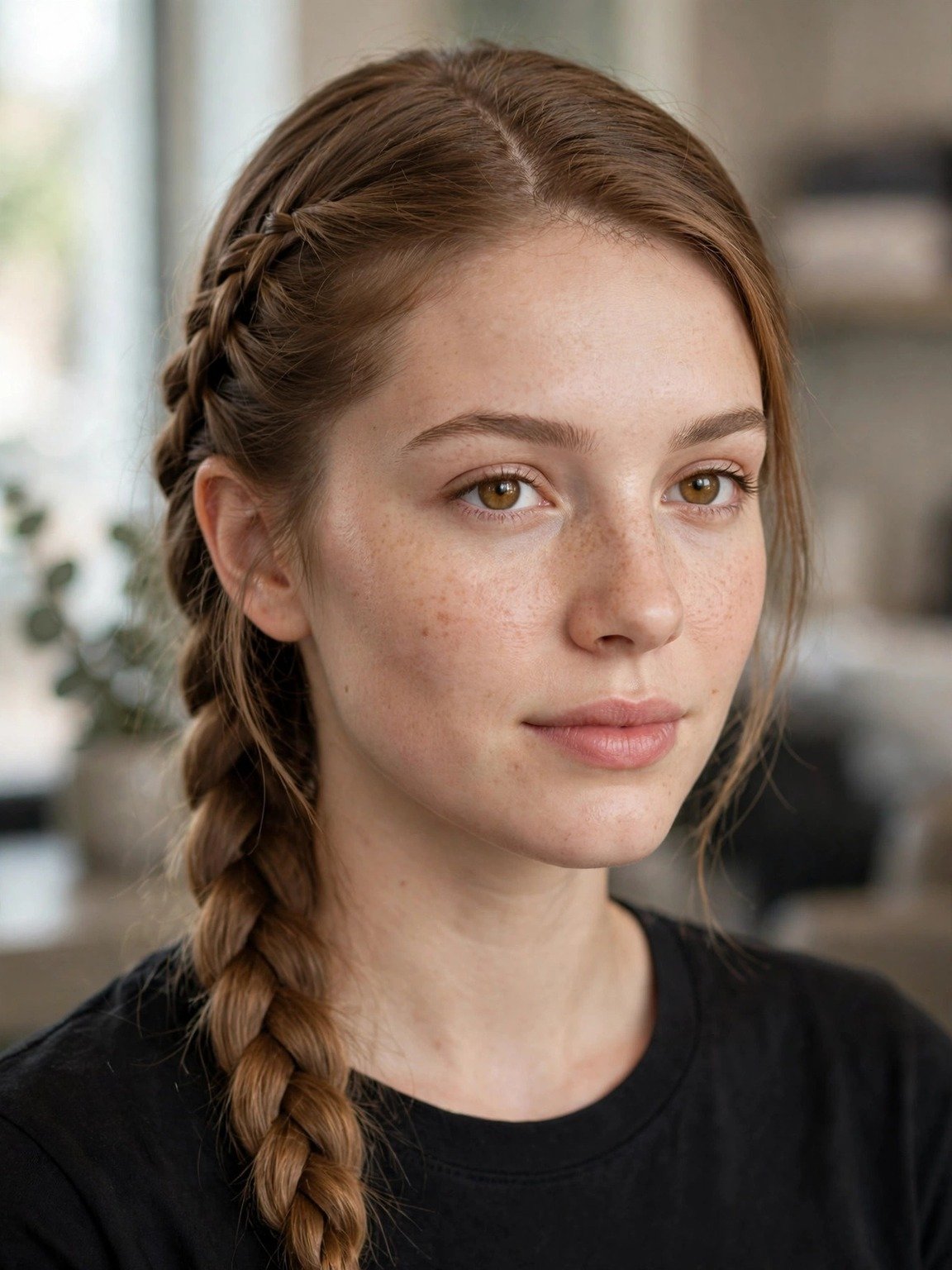
A French braid adds hair to the sides as you go, keeping the braid snug against the head. The simplified version here uses bigger sections so beginners can finish in about two minutes. Once the rhythm clicks, you will wonder why it ever felt hard.
Start with a deep side part and braid diagonally so you can see your hands in the mirror. Keep the added sections chunky until the motion feels natural.
- Best for: Beginners ready to try their first scalp braid.
- Styling difficulty: Easy
- Maintenance level: Low
3. Dutch Braid Basics
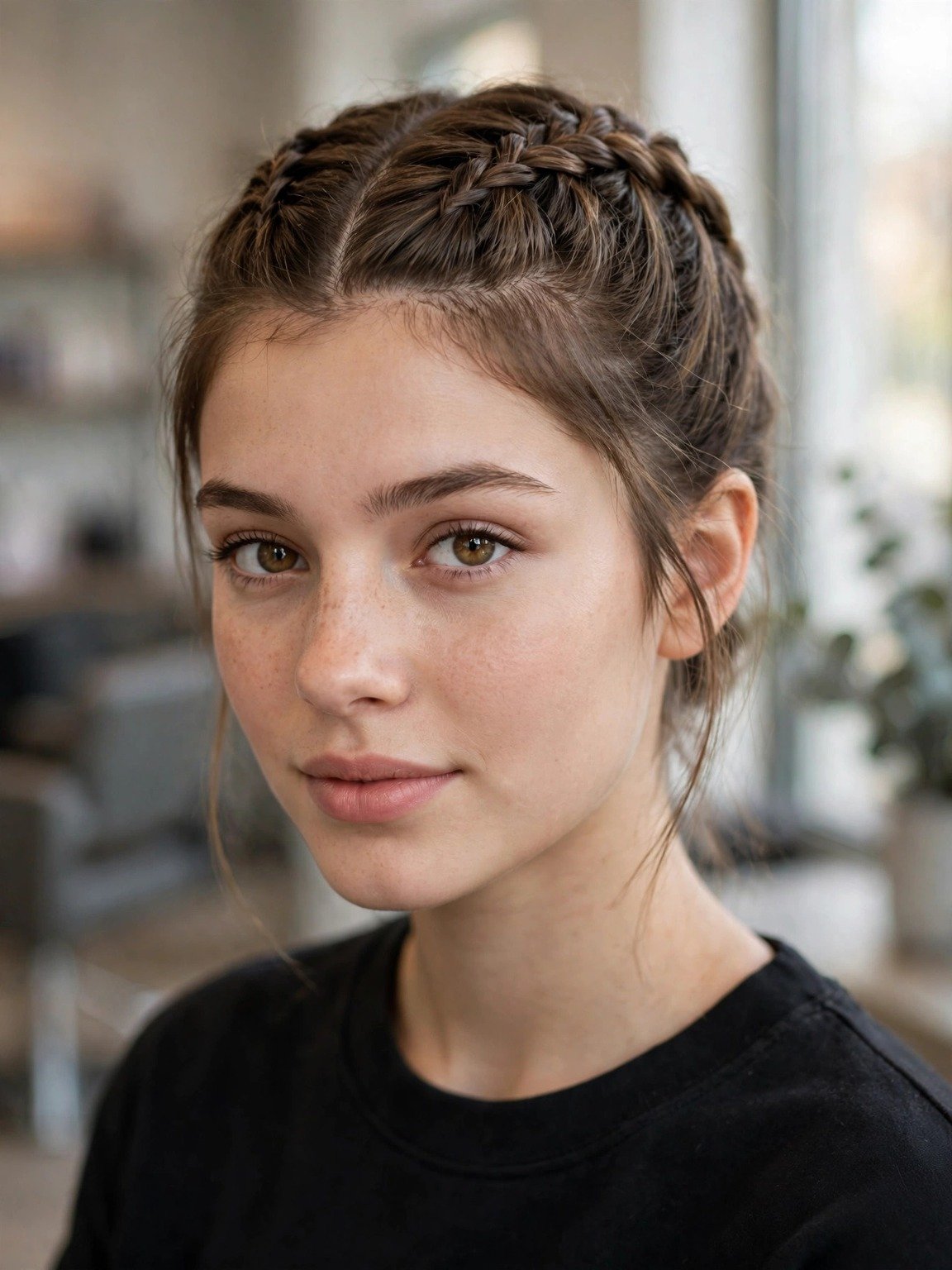
A Dutch braid is a French braid in reverse: you cross strands under instead of over. The result is a braid that pops out from the head, which many beginners find easier to see and control. Many beginners find the underhand motion easier to feel than the overhand one.
Think under, under, under as your mantra, and add hair to each outer section before crossing. Practice on slightly damp hair so the strands stay together.
- Best for: Beginners who want a bold, raised braid.
- Styling difficulty: Easy
- Maintenance level: Low
4. Simple Rope Twist Braid
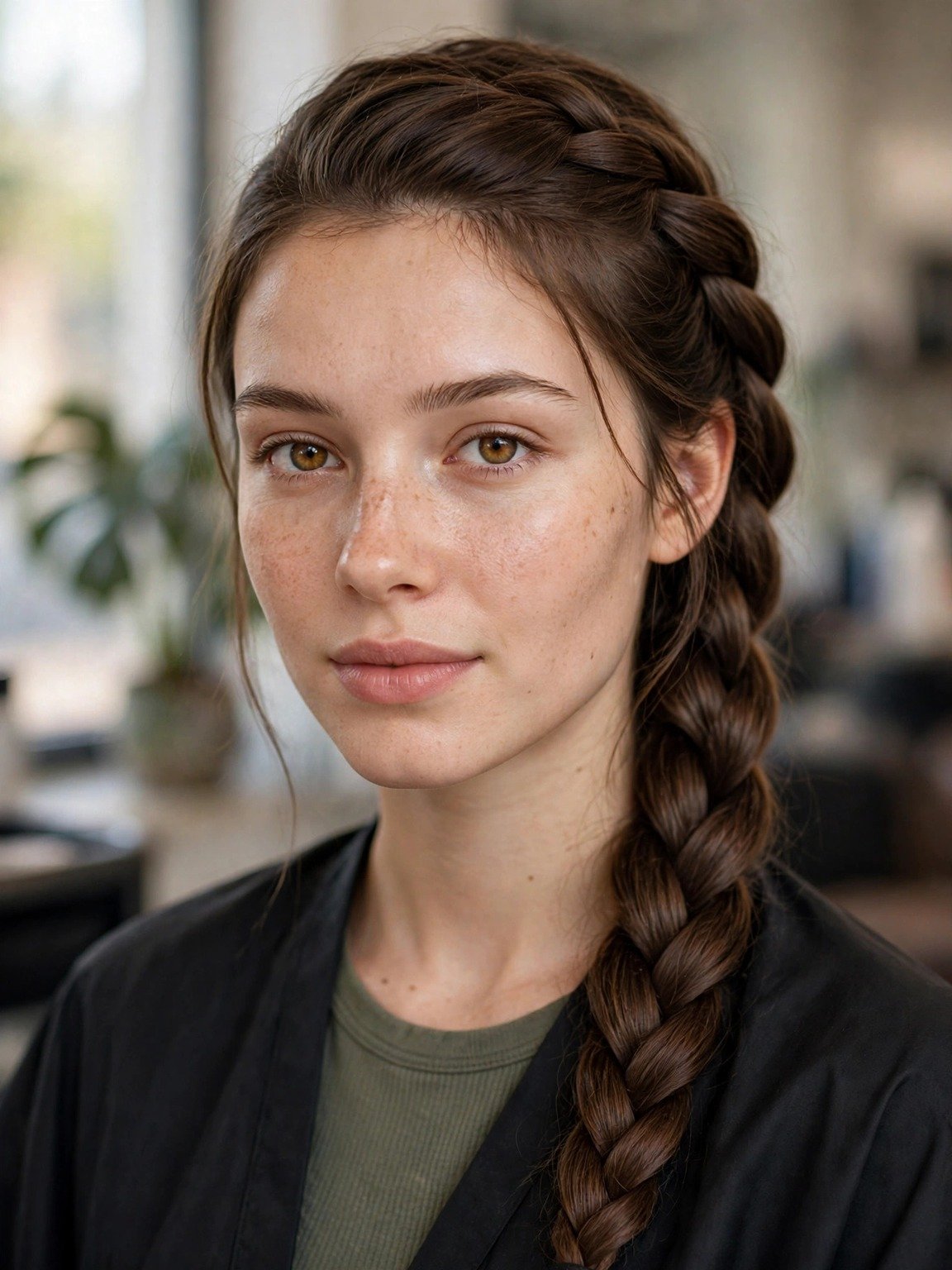
A rope braid uses only two twisted sections, so there is almost nothing to memorize. Twist both sections the same way, then twist them around each other the opposite way. It is also a great style for keeping hair tidy during workouts.
Secure the end tightly because rope braids unravel faster than woven ones. A dab of gel on the sections before twisting keeps everything smooth.
- Best for: The fastest braid a beginner can learn.
- Styling difficulty: Easy
- Maintenance level: Low
5. Beginner Fishtail Braid
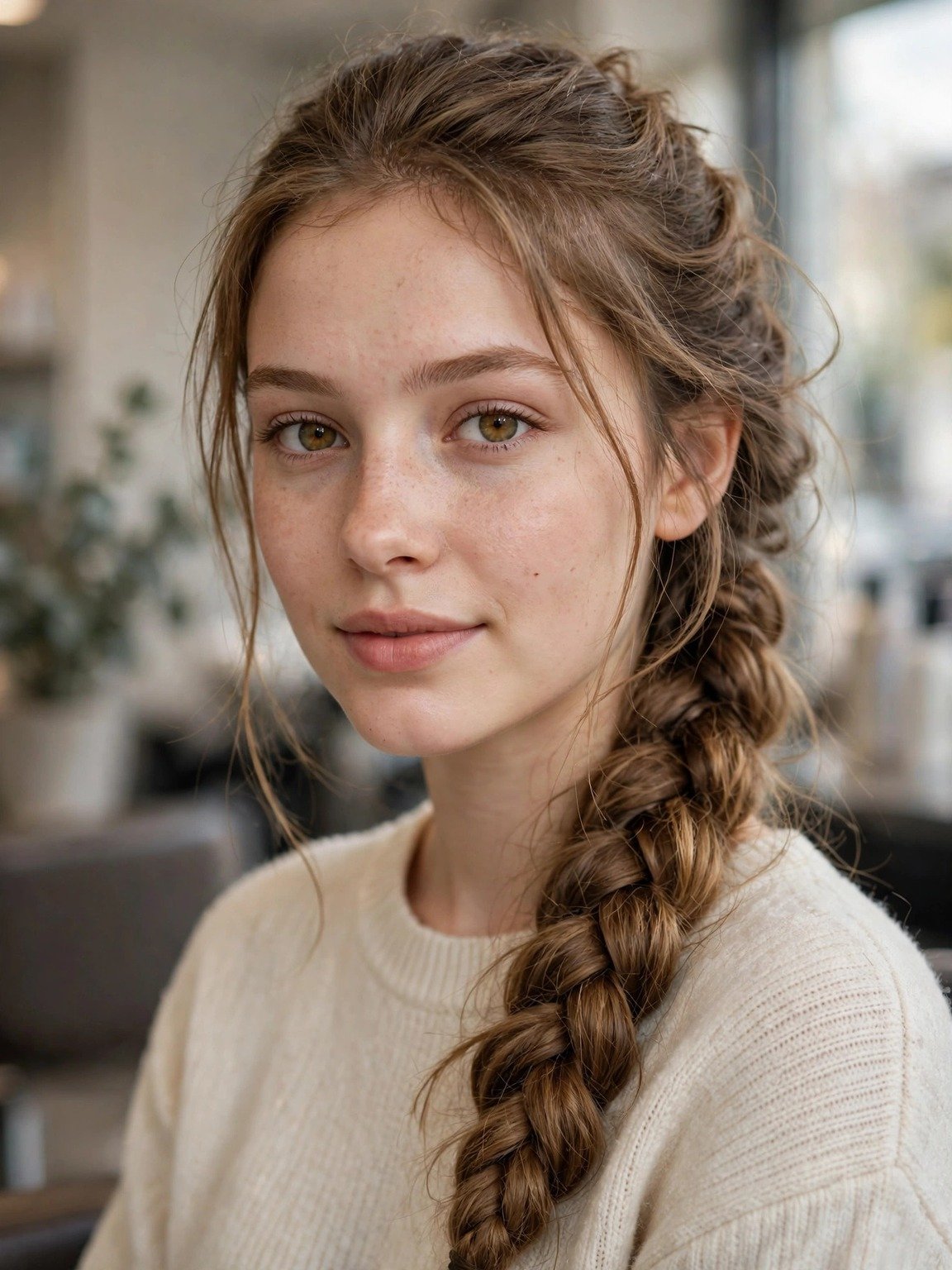
A fishtail braid looks complex but only uses two sections and a simple repeating move. Small pieces cross from one side to the other until the braid is done. The finished braid always looks more advanced than the effort involved.
Work with bigger pieces at first for a chunky, forgiving fishtail. Tie your hair in a low ponytail to start so the sections cannot slip away.
- Best for: Beginners who want an impressive-looking braid fast.
- Styling difficulty: Easy
- Maintenance level: Low
6. Pull-Through Braid for Beginners
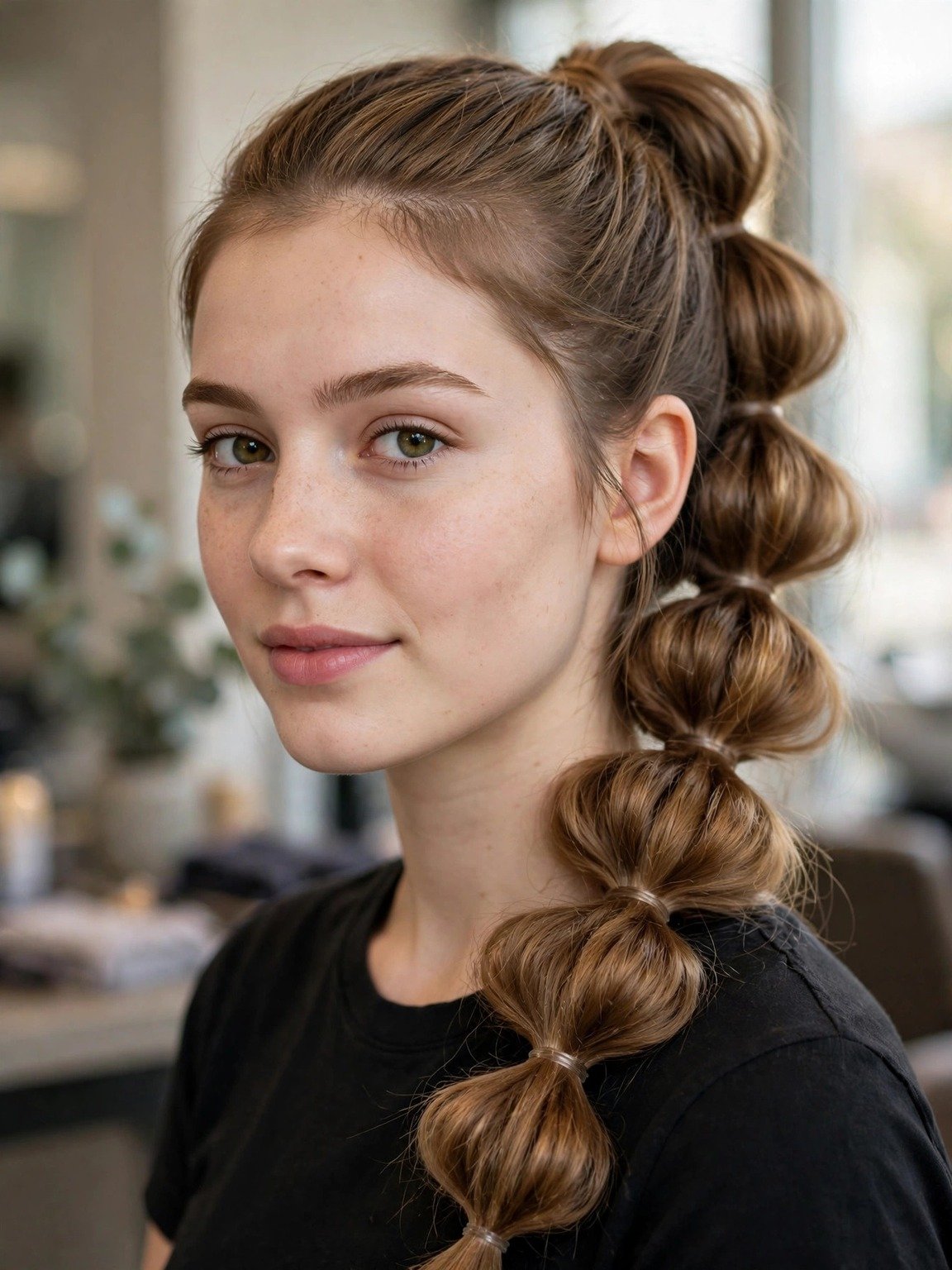
A pull-through braid needs zero weaving skill: you just stack ponytails and loop them through each other. The result looks like a thick, complicated braid. It is the perfect confidence booster for nervous beginners.
Use small clear elastics and make each ponytail section the same size. Gently pull the sides of each loop wider for a full, even braid.
- Best for: Anyone who struggles with traditional weaving.
- Styling difficulty: Easy
- Maintenance level: Low
7. Five-Minute Side Braid
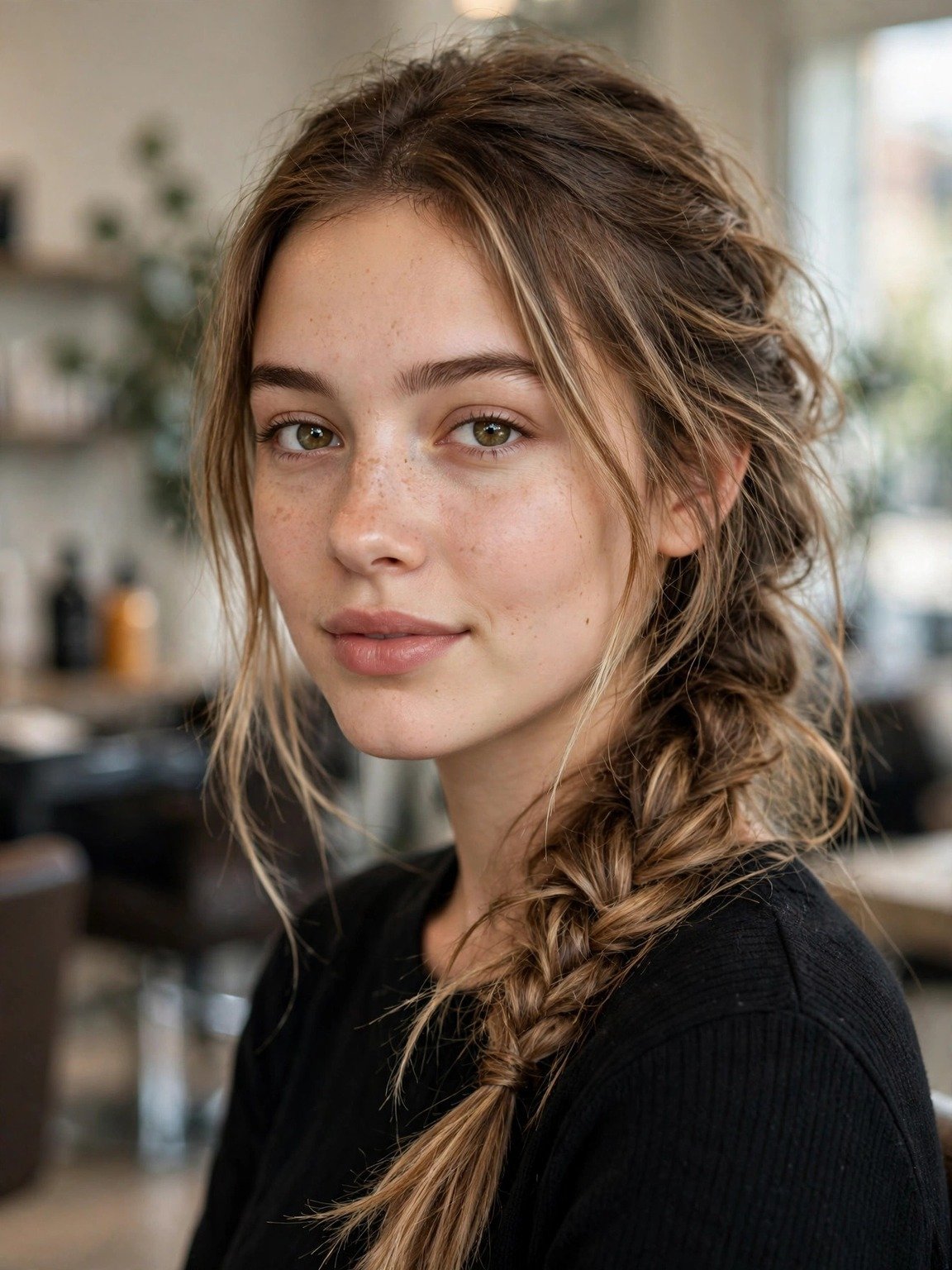
Sweeping all your hair to one side and braiding it takes five minutes and looks effortlessly pretty. It is the perfect everyday braid for busy mornings. It is proof that pretty hair does not need to take all morning.
Braid over your shoulder so you can watch your hands, and secure with an elastic that matches your hair. Pull the braid edges wide for a fuller finish.
- Best for: A quick, pretty braid before work or school.
- Styling difficulty: Easy
- Maintenance level: Low
Looking for a fresh change, explore cute hairstyles featuring simple braids, ponytails, layers, and soft textures that work beautifully for different occasions.
8. Lace Braid Starter
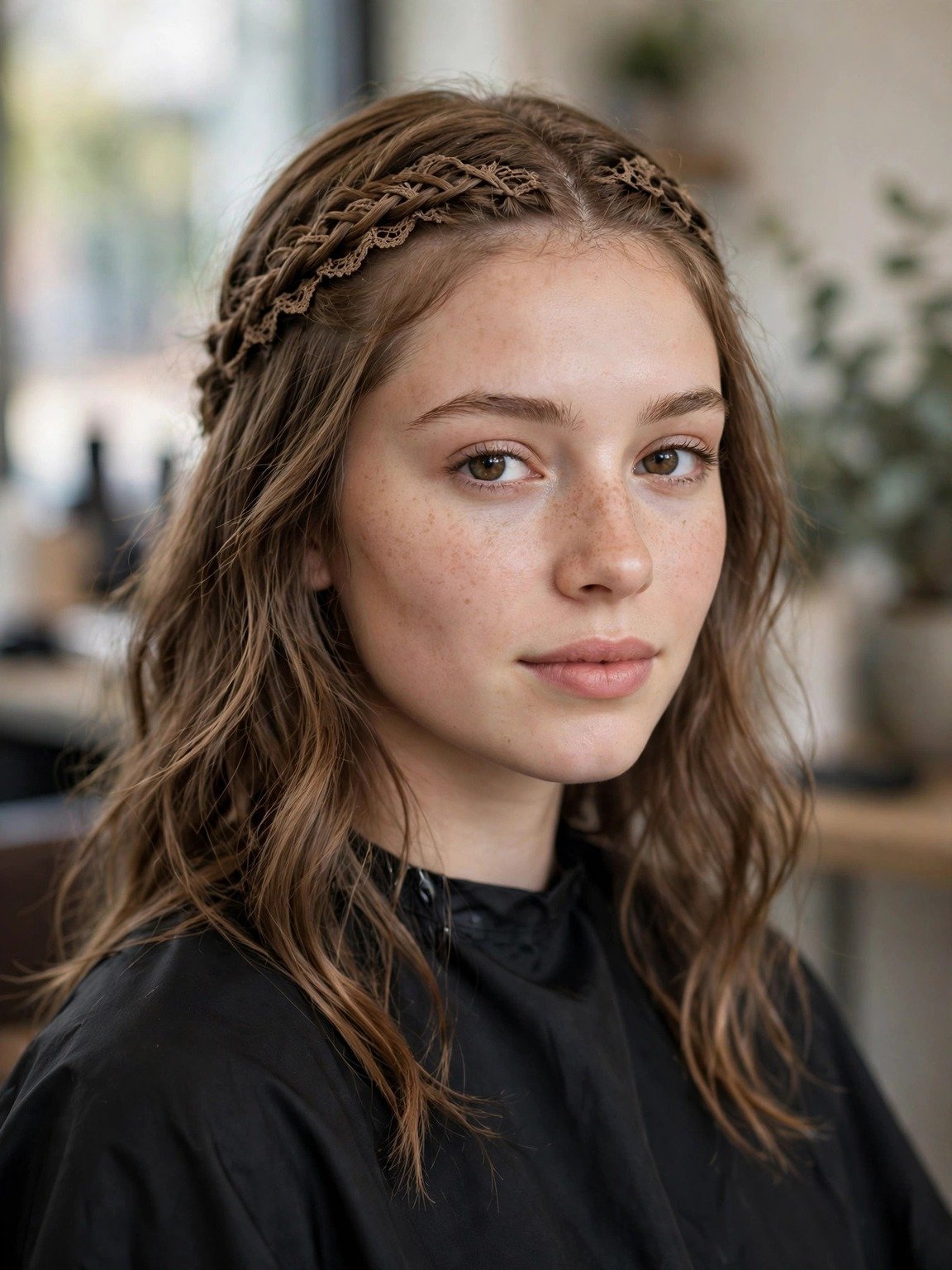
A lace braid adds hair from only one side, making it simpler than a French braid. It creates a pretty frame along the hairline with half the coordination. It is a small win that builds real braiding confidence.
Braid along your part, adding hair only from the top side each time. Pin the end behind your ear for a sweet, simple accent.
- Best for: Beginners learning to add hair while braiding.
- Styling difficulty: Easy
- Maintenance level: Low
9. Easy Braided Headband
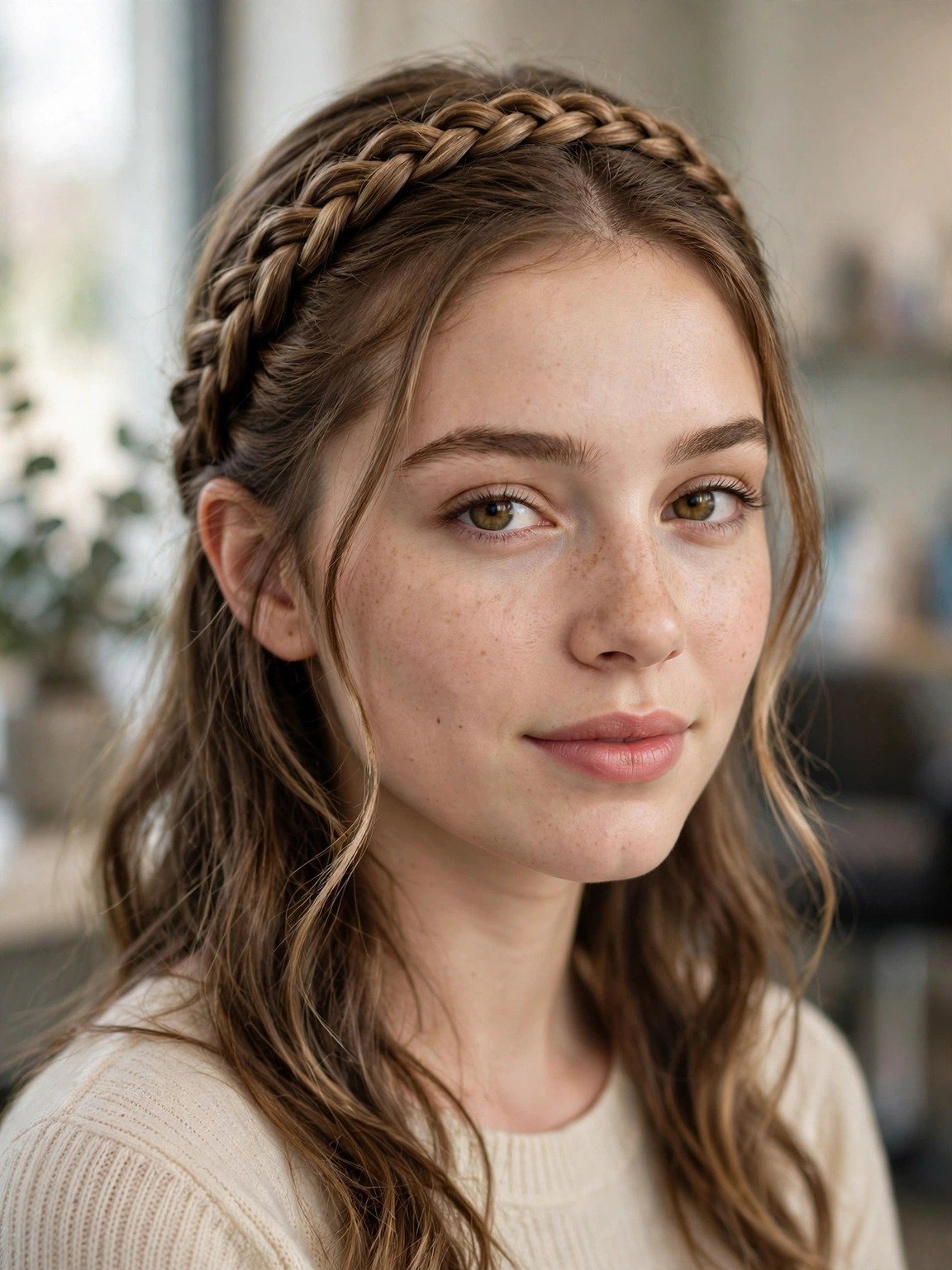
A braided headband uses a small section of your own hair as a headband. It keeps hair off your face and looks far more skilled than it is. It keeps hair off your face while looking effortlessly chic.
Braid a section from behind one ear, lay it across your crown, and pin behind the other ear. Hide the end under the loose hair for a seamless look.
- Best for: A face-framing style with basic braid skills.
- Styling difficulty: Easy
- Maintenance level: Low
10. Four-Strand Braid Steps
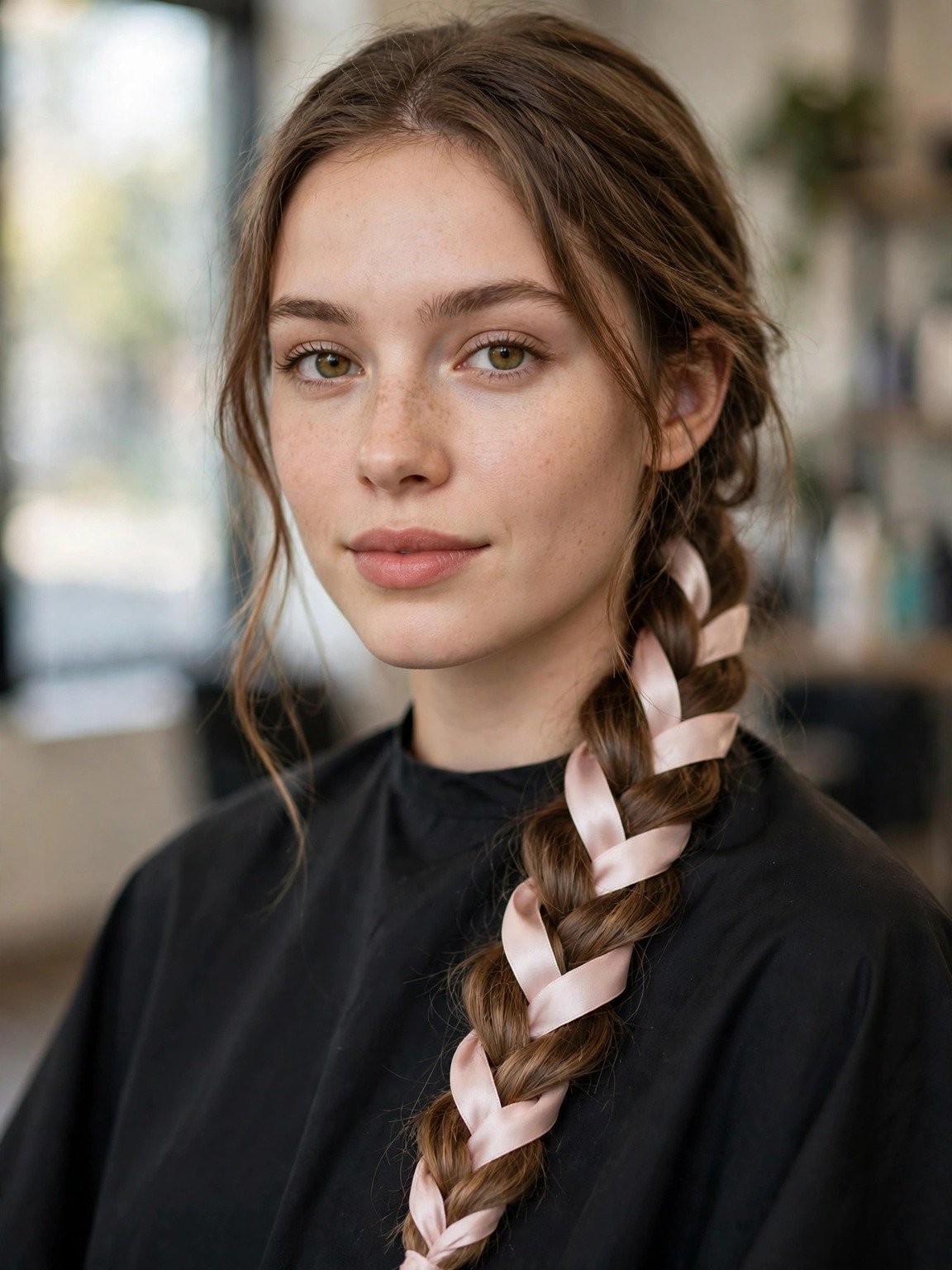
A four-strand braid weaves flat like a ribbon and looks fancier than a basic plait. The pattern is simple once you learn the over-under rhythm. The flat, woven texture stands out from ordinary braids.
Number the strands one to four in your head, and weave one over two, under three, over four. Go slowly for the first few inches until the rhythm clicks.
- Best for: Beginners ready for a fancier woven look.
- Styling difficulty: Medium
- Maintenance level: Low
11. Waterfall Braid Simplified

A waterfall braid drops one strand each round so hair cascades through the braid. The simplified version works on a side section so you can see what you are doing. It is worth the practice for such a romantic result.
Drop the bottom strand each time and pick up a new one right behind it. Practice the drop-and-replace move slowly before trying it across the whole head.
- Best for: A romantic braid once basics feel comfortable.
- Styling difficulty: Medium
- Maintenance level: Low
12. Bubble Braid Without Braiding
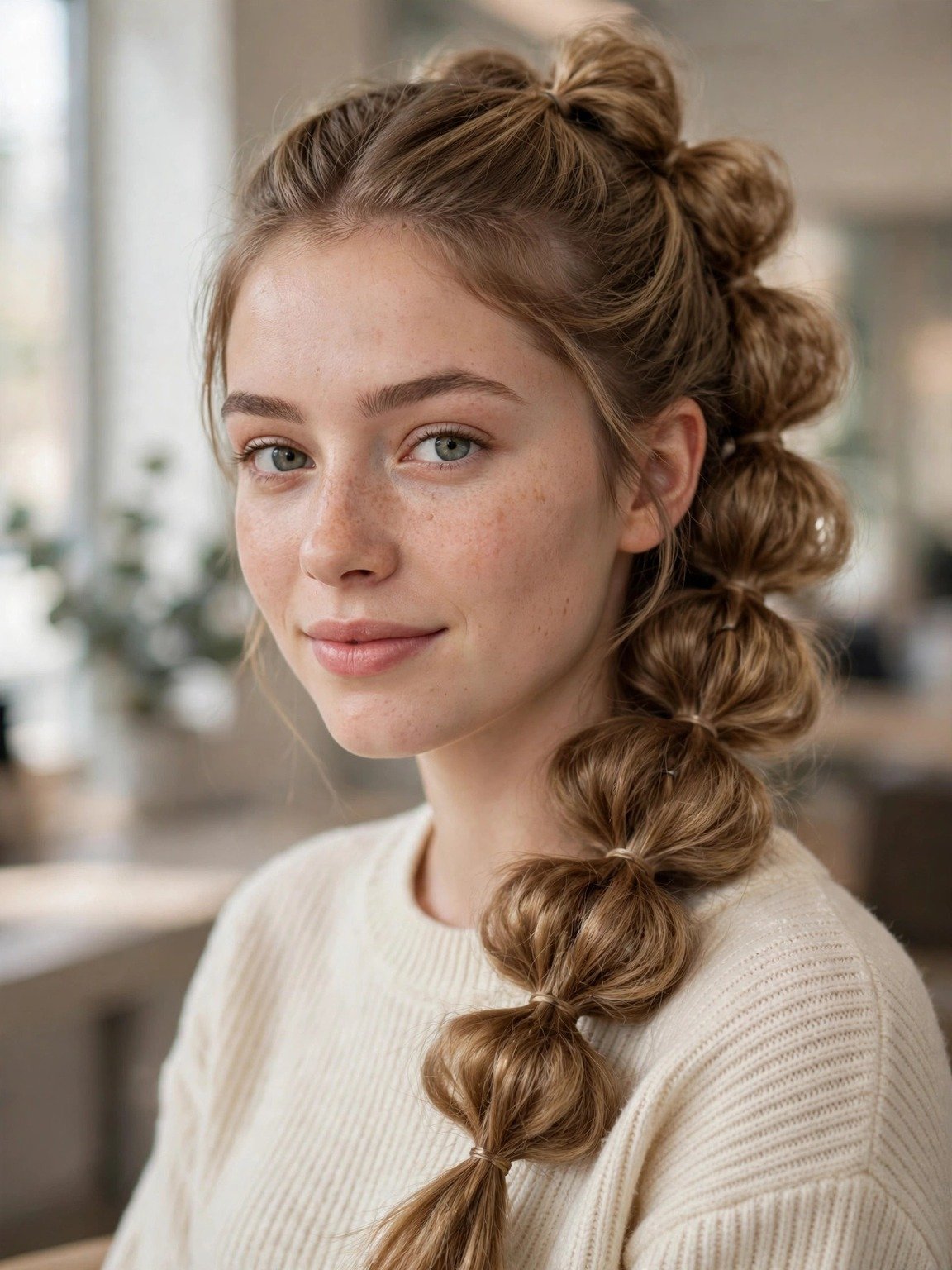
A bubble braid uses only elastics, so it is the easiest style on this list. Stack ponytails, puff each section, and you have a braid-like look with no weaving at all. It is ideal for mornings when you are short on time and patience.
Space elastics about two inches apart and tug each bubble outward evenly. Wrap a strand of hair around each elastic to hide it.
- Best for: Zero-skill braiding with maximum visual payoff.
- Styling difficulty: Easy
- Maintenance level: Low
13. Milkmaid Braid Made Easy
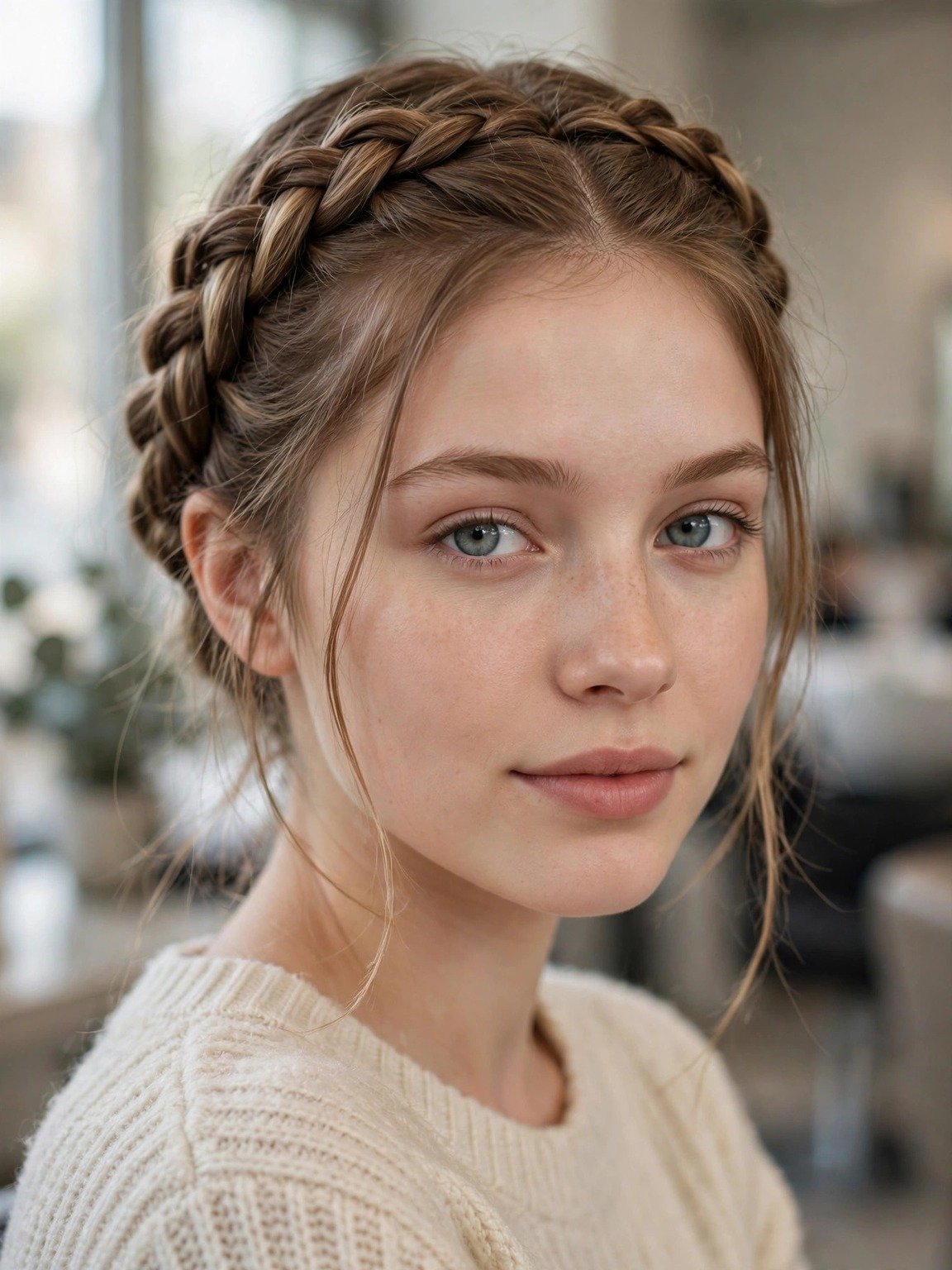
Milkmaid braids are just two regular pigtail braids pinned over the head. If you can do a basic braid, you can do this charming updo. It looks impressive but uses only the most basic skills.
Braid two low pigtails, then wrap each up and over, pinning as you go. Pancake the braids first so the wrapped headband looks full.
- Best for: A cute updo using only basic braiding skills.
- Styling difficulty: Easy
- Maintenance level: Low
14. Braided Ponytail in Minutes
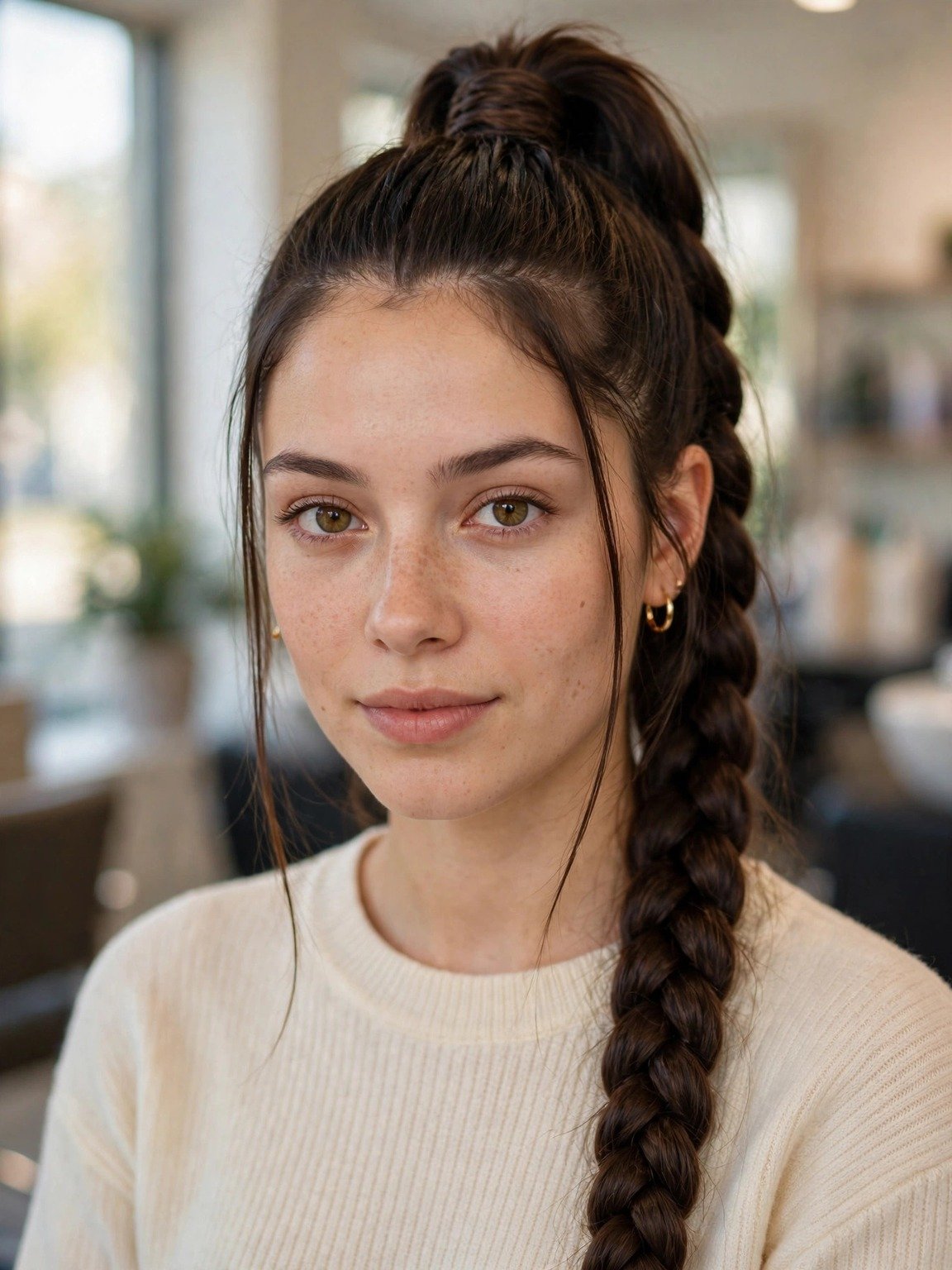
Braiding a ponytail is easier than braiding loose hair because the base is already controlled. It turns an everyday ponytail into something special in minutes. It is a simple upgrade with a big visual payoff.
Secure a high or low ponytail first, then braid the tail and tie the end. Wrap a strand around the base elastic for a polished finish.
- Best for: Upgrading a ponytail with minimal effort.
- Styling difficulty: Easy
- Maintenance level: Low
After choosing your next hairstyle, complete the look with pretty nail designs that coordinate beautifully with your colors, outfit, and personal style.
15. Half-Up Braid for Beginners
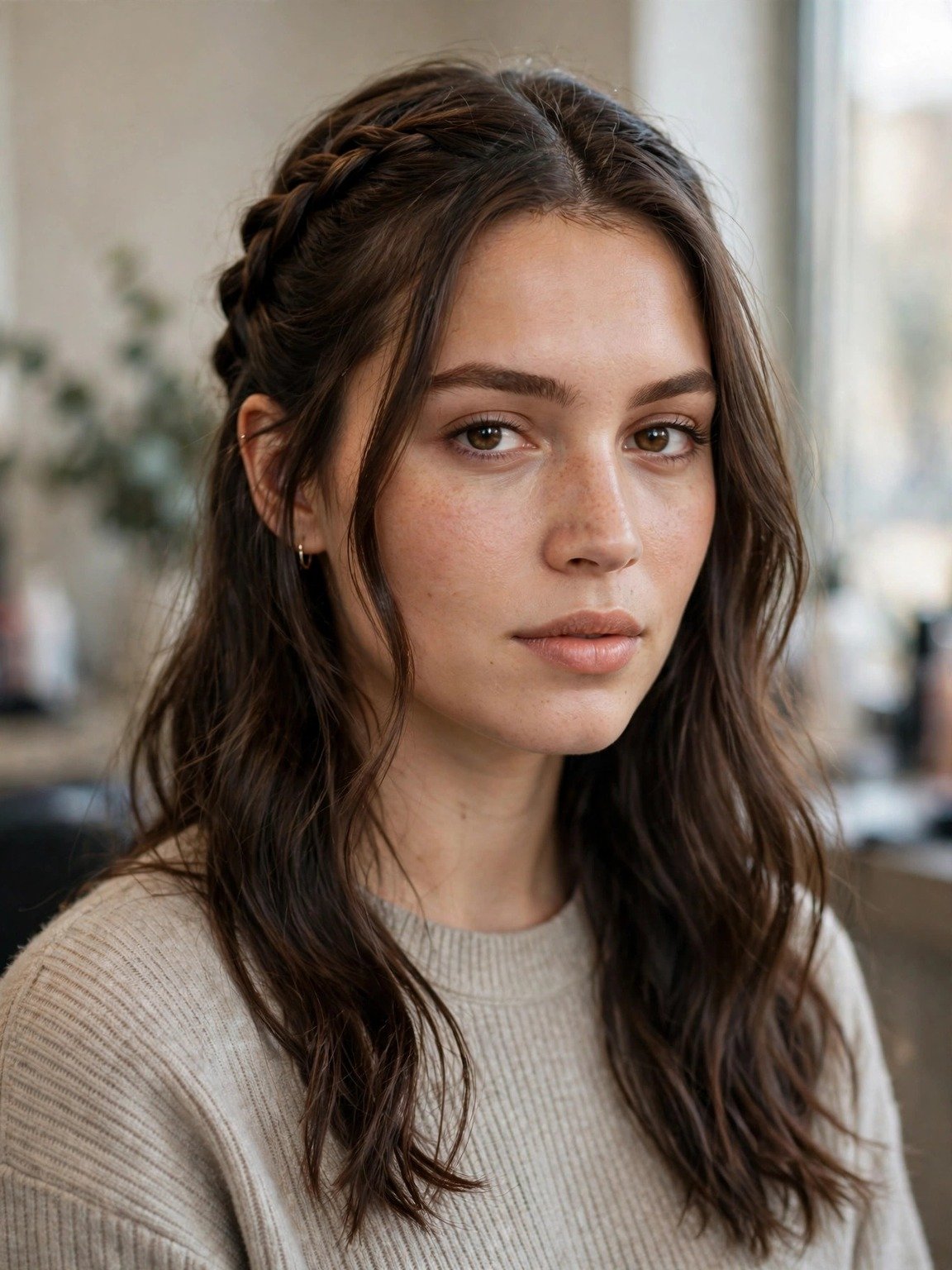
A half-up braid uses only the top section of hair, so there is less hair to manage. It is a gentle first step into scalp braiding. It is the gentlest introduction to braiding back from the face.
Gather the top section, braid it back a few inches, and secure with a small elastic. Let the rest of your hair hang loose underneath.
- Best for: A first scalp braid with minimal hair to handle.
- Styling difficulty: Easy
- Maintenance level: Low
16. Reverse Fishtail Shortcut
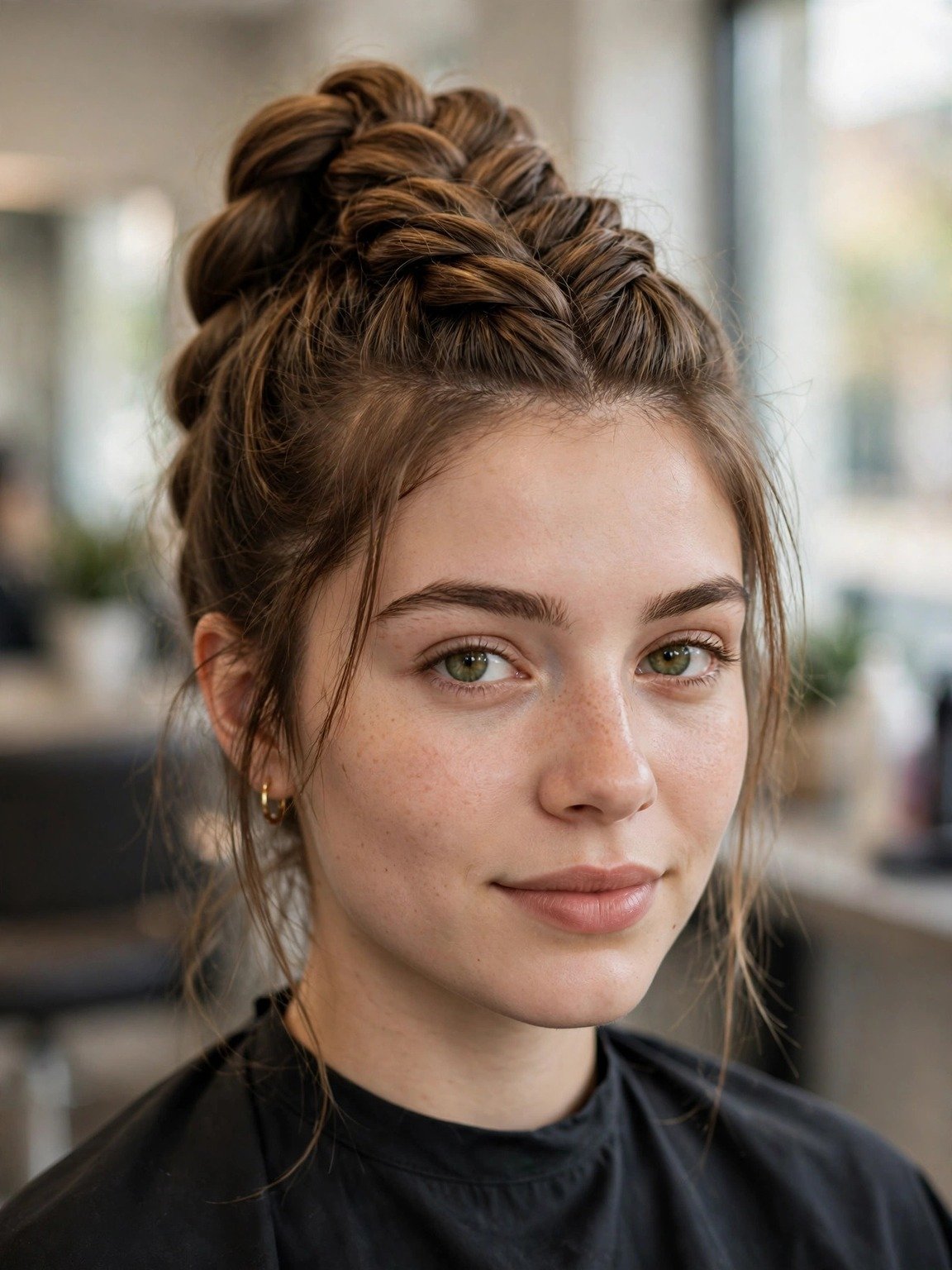
A reverse fishtail crosses pieces under instead of over for a raised, 3D effect. The steps are the same as a regular fishtail, just mirrored. The dimensional texture is very forgiving of small mistakes.
Start with a regular fishtail until you are comfortable, then flip the direction. The raised texture hides uneven sections nicely.
- Best for: A bolder fishtail once the basic move feels easy.
- Styling difficulty: Medium
- Maintenance level: Low
17. Messy Braided Bun
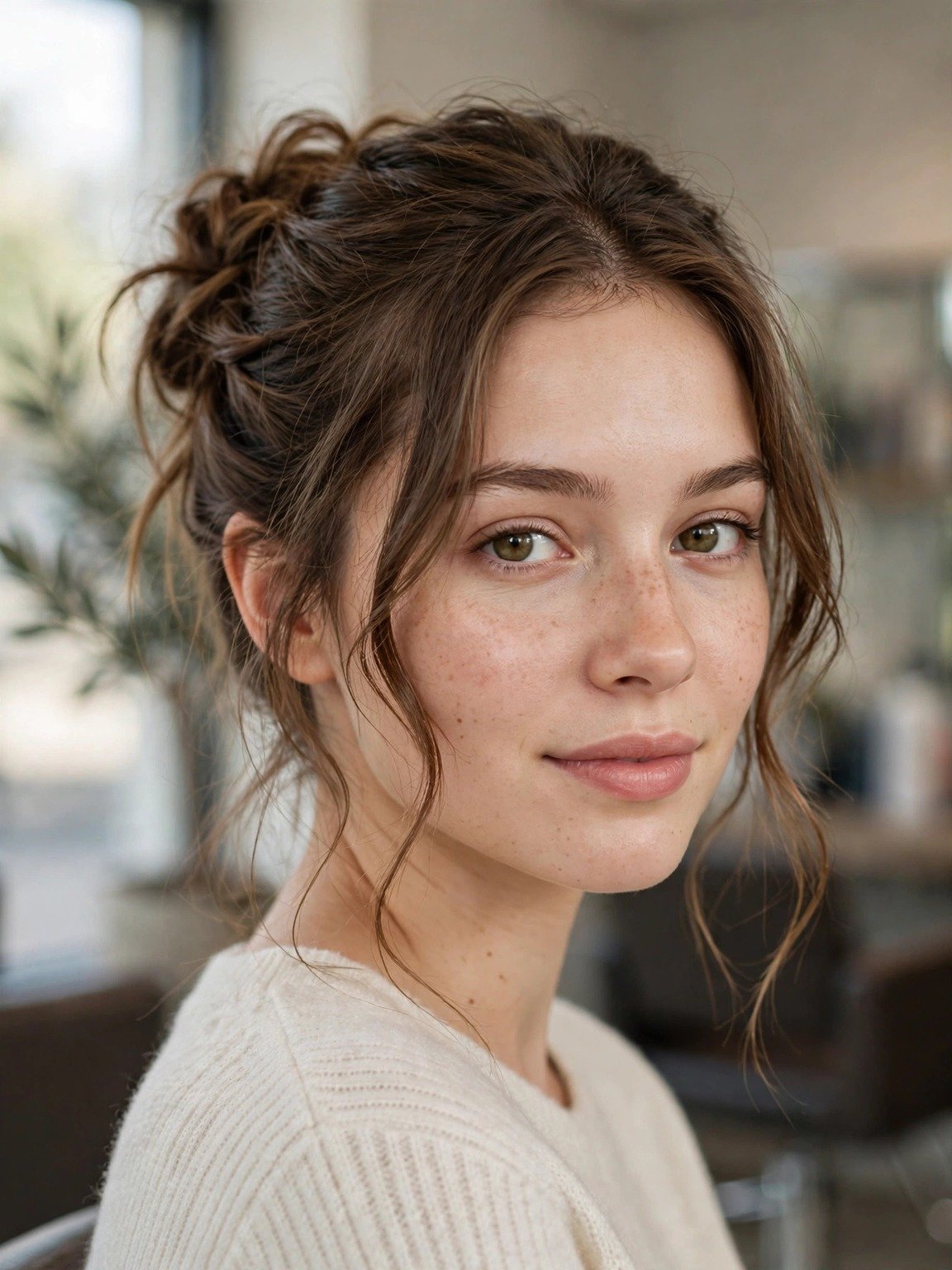
A messy braided bun forgives every mistake because imperfection is the point. Braid loosely, wrap it up, and pin wherever it lands. It is the ultimate low-pressure way to practice braiding.
Braid a low ponytail loosely, coil it into a bun, and pin generously. Pull out face-framing pieces for a soft, lived-in finish.
- Best for: A forgiving updo that rewards imperfection.
- Styling difficulty: Easy
- Maintenance level: Low
18. Twisted Crown Tutorial
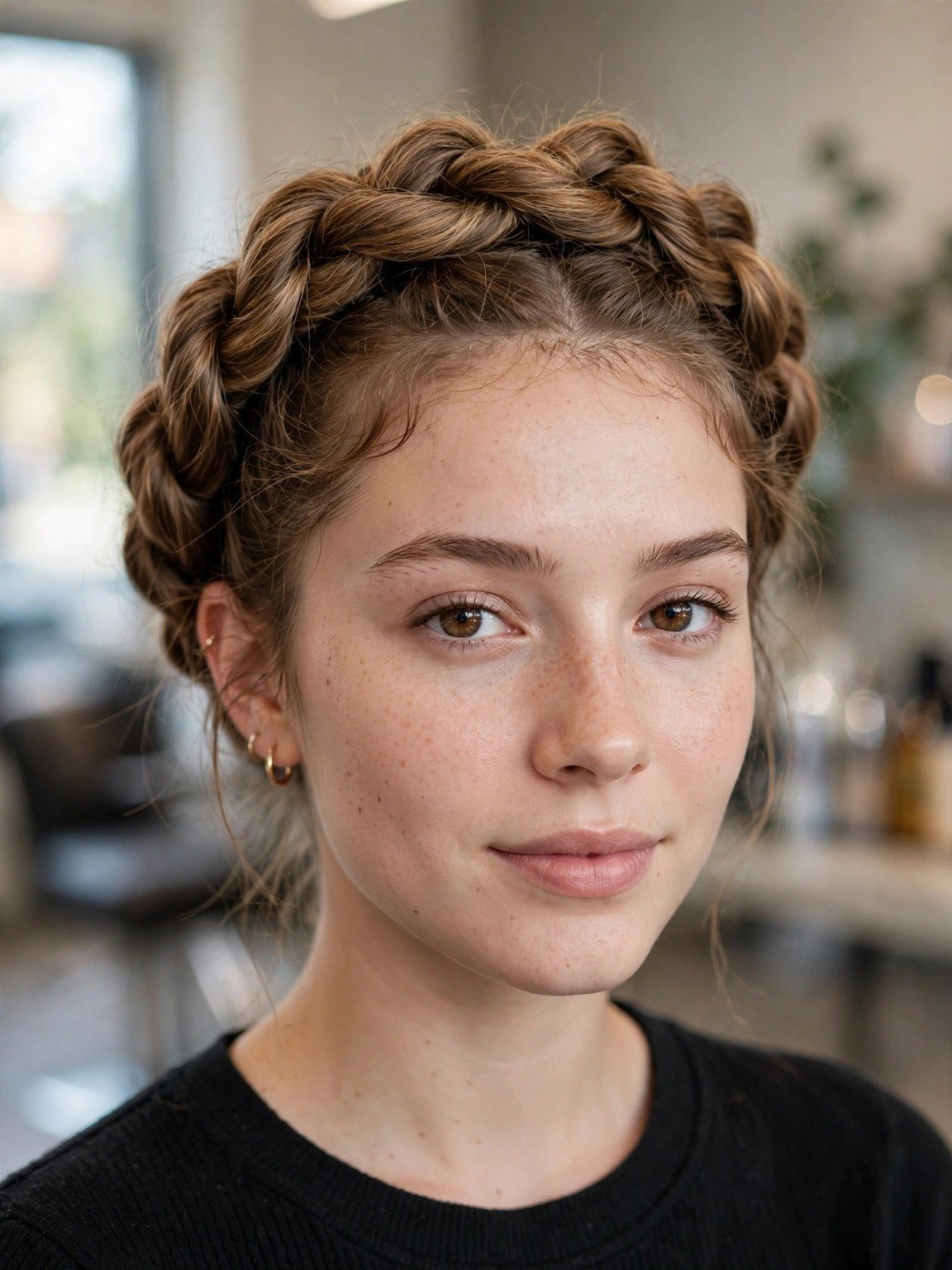
A twisted crown uses simple two-strand twists instead of braids, making it the easiest crown style to learn. It gives the same elegant effect with half the technique. It delivers elegance with almost no learning curve.
Twist a front section back on each side, adding hair as you go, and pin both at the back. A little texturizing spray keeps the twists from slipping.
- Best for: An elegant crown look without braiding skills.
- Styling difficulty: Easy
- Maintenance level: Low
19. Pigtail Braids for Beginners
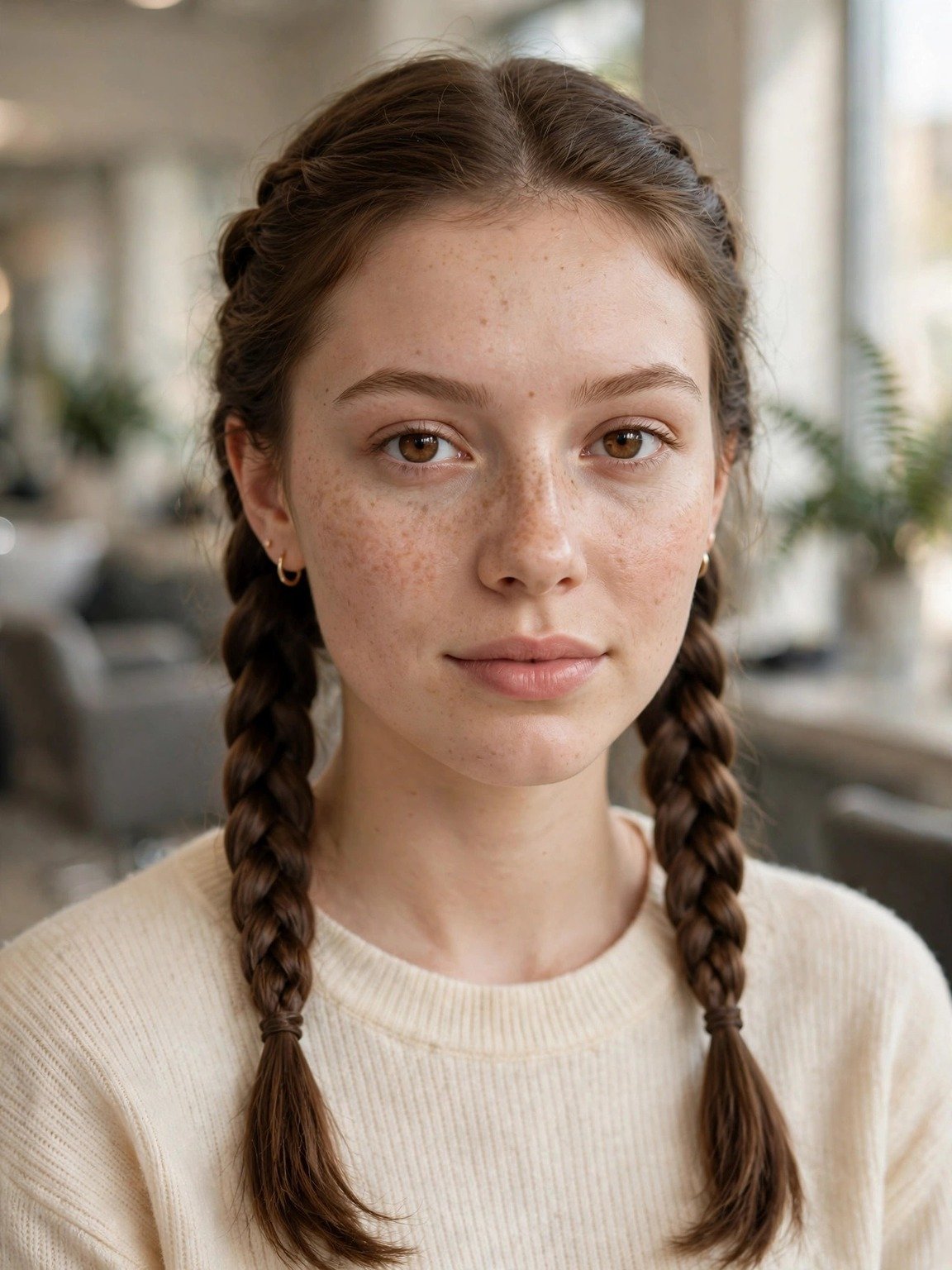
Two pigtail braids let you practice on smaller, easier-to-handle sections. They are symmetrical, cute, and great for building muscle memory. Symmetry practice here pays off in every future style.
Part down the middle and braid each side over your shoulders where you can see. Keep both braids the same tightness for a balanced look.
- Best for: Building braiding confidence with small sections.
- Styling difficulty: Easy
- Maintenance level: Low
20. French Braid Pigtails
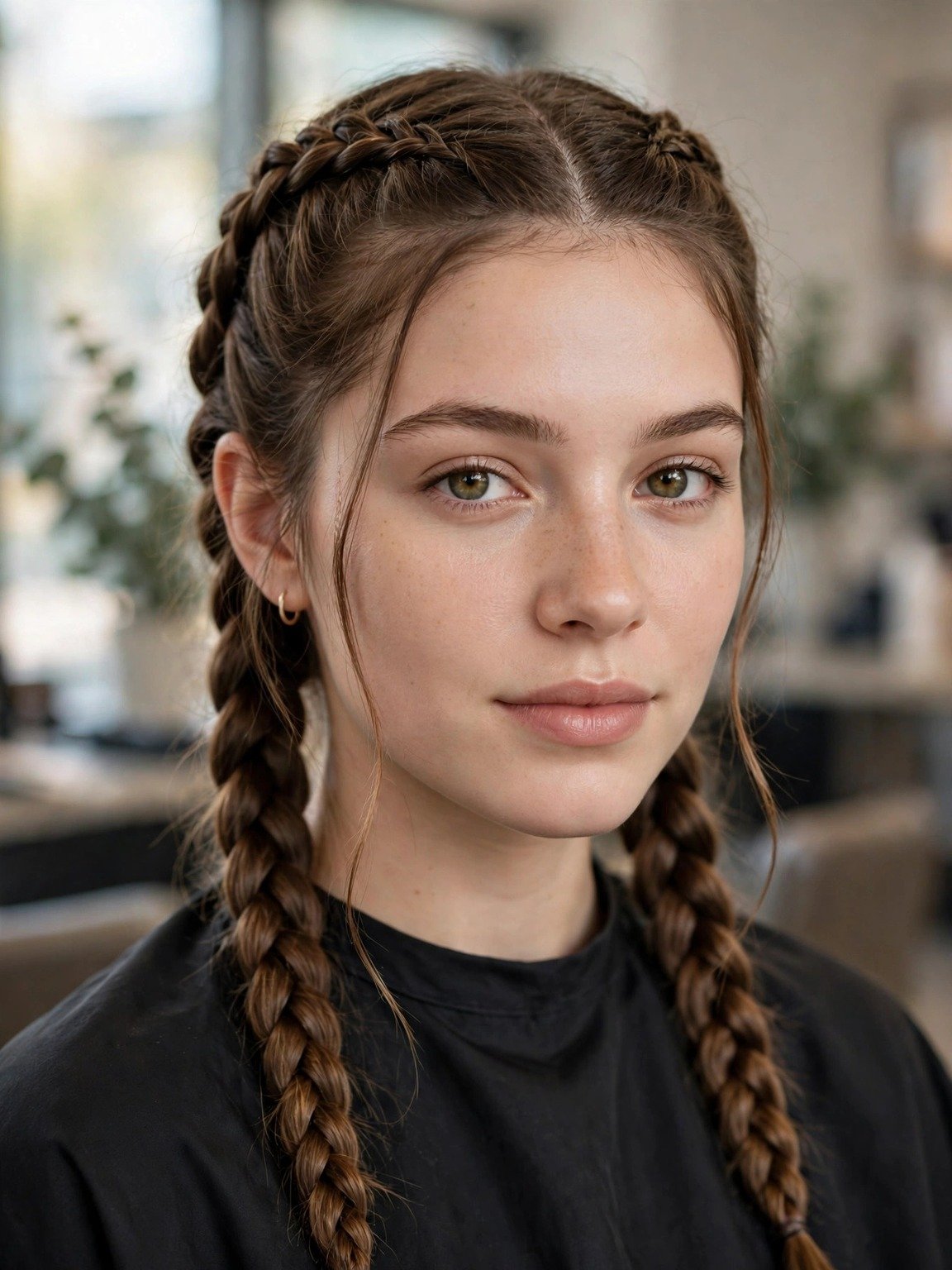
French braid pigtails combine scalp braiding practice with a cute, sporty result. Each side is a small, manageable French braid. They are sporty, cute, and great for active days.
Part down the middle and French braid each side from the hairline to the nape, then finish with regular braids. Mirror each side as you go.
- Best for: Practicing French braiding in small sections.
- Styling difficulty: Medium
- Maintenance level: Low
If you’re refreshing your appearance, explore beautiful tattoo ideas alongside your favorite hairstyle for a personal look that feels creative, expressive, and unique.
21. Braided Top Knot Tutorial
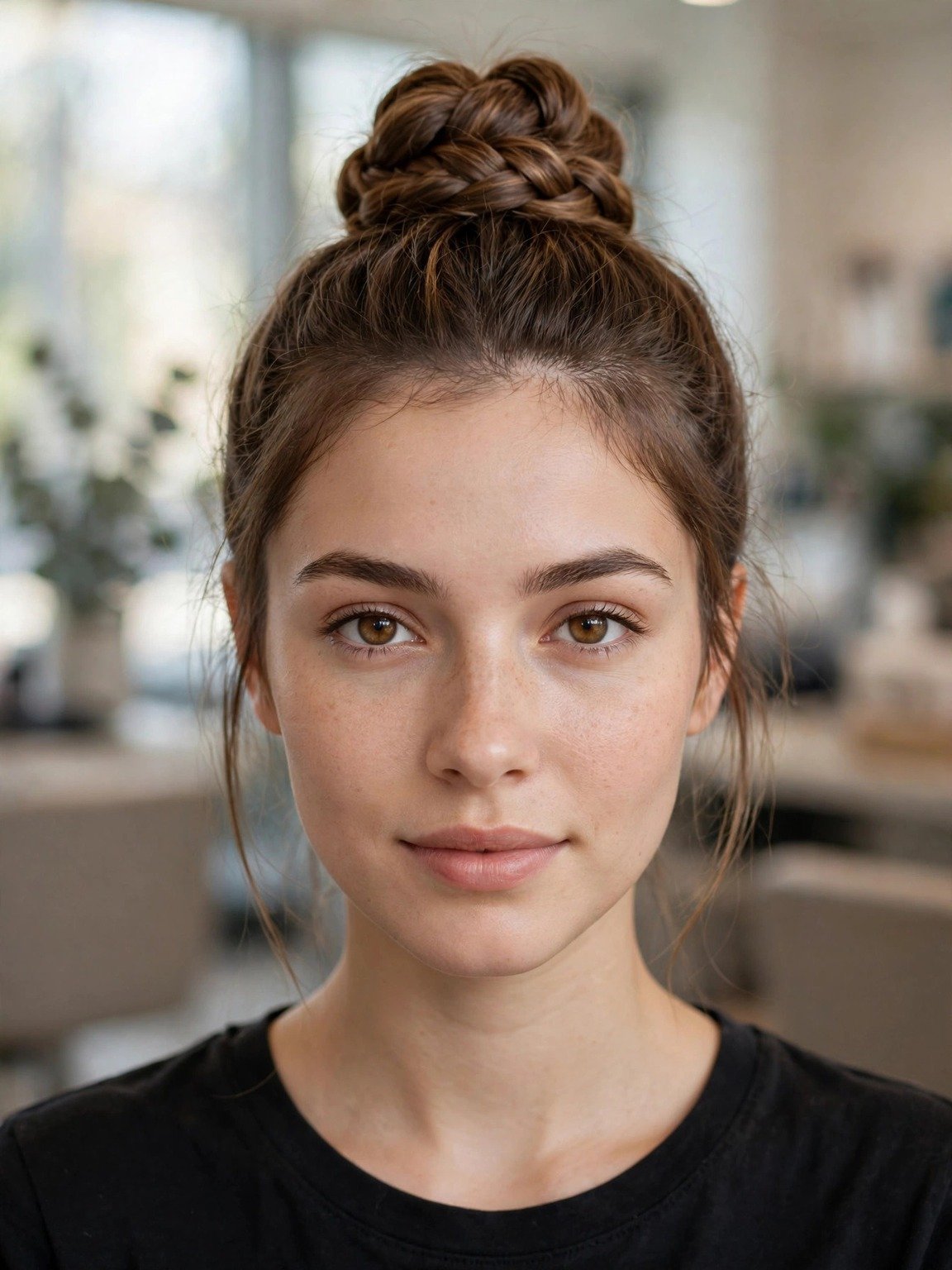
A braided top knot stacks two beginner skills: a ponytail and a basic braid. Wrap the braid into a bun and you have a polished updo. It is a satisfying final project for your new skills.
Make a high ponytail, braid the tail, then wrap the braid around the base and pin. Fan the wrapped braid slightly for a fuller-looking bun.
- Best for: A polished updo from two beginner skills.
- Styling difficulty: Easy
- Maintenance level: Low
Choosing the Right Braid for Your Hair
Start with your skill level, not your ambition. These braid hairstyles easy tutorial styles are ordered from simplest to trickiest, so work through them in order and master each move before moving on. Skipping ahead too fast is the main reason beginners get frustrated.
Prep your hair for learning. Slightly dirty or damp hair grips better than freshly washed hair, and a little leave-in conditioner tames flyaways that make braiding harder. When you follow a braid hairstyles easy tutorial, good prep removes half the difficulty from learning.
Use the right tools. A hand mirror helps you see the back of your head, small clear elastics secure practice braids invisibly, and clips keep sections separated while you learn. The right tools make practice sessions much less frustrating.
Be patient with yourself. Everyone’s first braids look lumpy, and that is completely normal. Ten minutes of practice a day on a single braid hairstyles easy tutorial builds the muscle memory faster than one long frustrating session. Short, regular practice beats one marathon session every time.
FAQs
What is the easiest braid for a complete beginner?
The classic three-strand braid is the easiest starting point. Practice it as a side braid first, then move on to rope braids and bubble braids, which need no weaving at all. Master it first, and every other braid becomes easier.
Why do my braids keep falling apart?
Freshly washed hair is slippery, so braid on second-day hair or add texturizing spray. Keep even tension as you braid and secure the end with a snug elastic. Even tension is a skill that improves quickly with practice.
How can I braid the back of my own head?
Use a hand mirror facing a wall mirror to see the back, and start with side braids you can watch. Braiding in a low ponytail first also keeps the sections controlled. Side braids are your best friend while you are learning.
Should I use products when learning to braid?
A little leave-in conditioner or smoothing cream tames flyaways and gives grip. Avoid heavy oils while practicing, since they make strands too slippery to hold. The right product makes learning noticeably easier.
How long does it take to learn to braid?
Most people learn a basic three-strand braid in one sitting. French and Dutch braids usually take a few days of short practice sessions before they feel natural. Celebrate small wins, like your first neat French braid.
Conclusion
Learning to braid is a skill that pays off every single day, and these twenty-one tutorials prove anyone can do it. Start with the three-strand basics, practice a little each day, and work your way up to French braids and fishtails. Before long, you will be braiding without a mirror and inventing your own variations. Save this guide, grab your elastics, and enjoy the process. Your best braid days are just ahead of you. Every expert braider started exactly where you are now, with lumpy first attempts and tangled fingers. Keep practicing, be kind to yourself, and trust the process. One day soon, braiding will feel as natural as brushing your hair.